Sunday, 9 February 2014

INTITAL PROJECT IDEAS.


The brief for our photography is:
"To produce a series of 6 - 8 photographs that investigate ideas of representation and identity in relation to your cultural position in society."

We do not have to chose our specific idea at this precise moment in time however we are mean't to be researching various ideas therefore I have come up with a list of possible ideas for my project:

--> a timeline of events in life - for example starting school, moving house, starting university, meeting people etc. and possibly writing them on a body and then photographing that
--> a day in the life of - photographs from daily life that sum up who i am in society and my identity
--> DNA - fingerprints, drop of blood, skin, handprints etc to emphasise my identity
--> mistaken identity - for example the negative representation of youths in the media
--> lyrics, quotes all written and photographed in various places that reflect my identity and my position in society.

Although these are only very basic ideas, hopefully I will soon find something that I can base my project on!

CREATING A CONTACT SHEET IN ADOBE BRIDGE.

This week we learn't how to create a contact sheet in the Adobe Bridge software. As previously mentioned the task was to put all of our Stanmer Park photos into a contact sheet at the end of the lesson.
Our tutor helped us by creating a step by step guide to making a contact sheet:
1. Using the folders panel you can navigate your images
2. In the content panel, you arrange the images in the order that you want them to appear in the gallery
3. Activate the images you want to include by holding "cmd" and clicking on each selected photo
4. At the top of the Bridge panel bar click the output button
5. In the output window click PDF
6. In the template tab, choose the contact sheet of your choice
7. In the document panel, select and edit the size, quality and background as you require it
8. Scroll down to the layout panel and adjust columns and rows as needed
9. Check and edit the overlays, header, footer and watermark panels
10. Go back to the output panel and click "Refresh Preview" to get a sneak peek at your contact sheet
11. On the bottom of the Output panel, press save and your contact sheet is complete!

Here's the contact sheet I created using photographs I have taken from Stanmer Park:


I also did some online research and found a really helpful youtube video for making a contact sheet:


STANMER PARK PHOTOGRAPHY.

As part of the course, today we went to the local Stanmer Park to take some test shots - in order to create a contact sheet. This gave us the opportunity to work with the Shutter Speed and Aperture on the D7000 and just generally get used to using the camera.
Here's some of the photos from the day:


READINGS.


    This week's core reading was chapter one of "Ways of Seeing" with John Berger. The chapter discusses the different ways that people see photographs. The chapter opens with the phrase
"Seeing comes before words. The child look and recognises before it can speak"
I feel as though this was the perfect opening to the chapter. It then goes on to look at how the way we see things in day to day life are affected by what we know or believe and that what we look at - particular objects, shapes, colours etc. is a choice, and that therefore we only see the items that are brought within our reach. It particularises the way that individuals looks at things and how we pick out objects that relate to us.


    The chapter then continues to discuss images, it claims that "an image is a sight which has been recreated or reproduced" whilst then discussing how a photographers way of seeing is usually represented in their choice of subject for a photograph.  A point I found particularly interesting was the idea that an image can outlast what it represents, that there is too much to an image for it just to be a representation - there will always be other stories and ideas behind it. 
   Berger then talks about the past and how cameras changed certain views. The camera itself completely distorted that way that men saw in general - a photograph captured meanings that were never seen to the human eye, whilst it also changed the view of paintings as they were simply a 2D representation of a moment whereas photographs always reflected a 3D sensation. He discusses the fact that a film that reproduces the images of a painting leads the spectator through the painting - looking at the hidden representations and meanings to it and the film leads the spectator to see various conclusions. 
    The piece is concluded with the idea that art of the past is completely lost, no longer existing and therefore as a results of this its authority is lost.

Tuesday, 28 January 2014

TERRY O'NEILL: READING OF A PHOTOGRAPH

     Another task we had to do today in class was take one of our chosen inspirational photo's and then go on to analyse and read it like we had previously learnt. The photograph I decided to choose was Terry O'Neill's snap of named "Faye Dunaway".


  • The denotation of the photograph was a woman simply lounging by the pool on what looks like a crisp, sunny morning. Scattered around the floor are newspapers, there is breakfast on the table and an Oscar winners statue aswell.
  • The connotations are that this lady is Faye Dunaway, winner of an Oscar the previous night for her starring role in the film "Network" and she is staying in the Beverly Hills Hotel. The newspapers on the ground are today's papers which are all filled with Oscar's headlines. Although she has received many other awards - it was this one that shocked many and changed her career completely.
  • In terms of the Studium - O'Neill and Dunaway were dating at the time when the photograph was taken and they stayed together in a suite at the hotel. He claimed that he wanted to capture the shock and "dazed confusion" on Dunaway's face. The photograph is set up like a regular poolside breakfast scene, yet Dunaway's silk clothing and high heels relate to the fact that she could have possibly stayed up overnight and show her changing into a worldwide star. Also, if you look closely, the teapot is actually central to the shot whereas you would expect the Oscar to be however, it ties in with the theme of her life changing and the transition into a big star. 
  • What stands out in relation to me is that Dunaway looks so completely relaxed and at ease, yet for someone who has most likely stayed up all night celebrating she still looks completely red carpet glamourous.


READING A PHOTOGRAPH

      This week in class, whilst discussing the previous reading's we devised a plan to help each of us when reading photos - it's basically a checklist of items to look our for and take into consideration in order to ensure a better understanding when reading a photograph. What we came up with was:

  • Aesthetics - what is included in the photo, any little details
  • Composition - how the picture is set out, what is in focus, what is central to the photo
  • Photographer - what is occurring in the life of the photographer, what is their previous work like, recurring themes?
  • Cultural State - what is going on in the world or specific place at the time when the photo was taken
  • Medium - the camera used, the film used
We also knew that when looking at a photograph we had to take into consideration 4 key things:
  • Denotation - the literal meaning / description
  • Connotation - the second / deeper meaning
  • Studium - cultural / historical context
  • Punctum - what stands out in relation to you


     We then put all of these key factors and the checklist into consideration against Diane Arbus' "A Family On Their Lawn One Sunday In Westchester NY 1969". The denotation of the photograph showed a young family enjoying their summer, relaxing and sunbathing with the children playing in the background. When we looked at a deeper meaning we saw that the man actually looks extremely unhappy and frustrated with his head in his hands which could reflect on his unhappy marriage. There is a possible alcoholic beverage on the table between them and this table also reflects the distance between the man and the woman which again emphasises this space between the couple. The huge amount of open space around them has connotations of wealth and the fact that they are facing completely away from their child shows a sort of neglect towards him. When we looked further into Diane Arbus for the Studium aspect of the photograph we discovered that in 1969 at the time when the photo was taken Diane has gotten divorced from her childhood sweetheart whom she had two children with. The setting is also relevant as she is from New York herself, and the fact that the photograph is in black and white also reflects on lots of her other work. The punctum of the image is that the child looks closer to the mother in the picture therefore I feel as though Diane felt that she was closer to her children, whilst also proving that the surrounding wealth cannot buy he any happiness.

READINGS.


     This week we had two different readings to do. One reading was just for us as individuals but the other we had to get into groups outside of class time and discuss it, in order to come to conclusions and a better understanding of what the reading was trying to convey.
     The first reading was the chapter "Loading..." in "Photography" by John Ingledew. I found out a lot more about the basics of photography from this chapter and a little more about how cameras work. Some facts I picked up on were:

  • Photography mixes different elements - chemistry, physics, optics, computers, electronics, commerce and creativity
  • Photographs can be powerful things - melting taboos, swaying opinions and cause explosive impacts
  • Photography gets straight to the heart of an issue and instantly grabs an event or personality
  • There was the invention of a cheap $1 camera by Kodak called the Kodak Brownie - which was specifically for children and helped revolutionise photography
  • Colour film uses the three basic colours of red, green and blue and then it can recreate any shade of colour
  • Pixel is short for "picture element" and each one is a solid block of colour 
  • Once an image is digitalised you can change any of the pixels - altering the brightness, colour and contrast
  • There are many similarities between the eye and the camera, eyes seen in stereo vision wheres photos only show 2 dimensions.
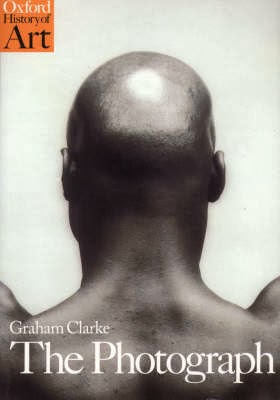
    The next reading was the one we had to discuss in our smaller presentation groups. This was Chapter 2 of Graham Clarke's "The Photograph" entitled "How Do We Read a Photograph". For our discussion we were given a series of questions to help us understand; what the author is trying to say, whether we agree with the given argument, what it represents and any questions that had arisen. The information we gathered was that you definitely cannot just be passive when looking at a photo and although some people don't, you need to look further and read into it. We also established that there are certain photo's such a the generic "selfie" that seem completely common with no meaning at all, when we should be looking deeper at the picture and see areas of confidence or insecurity. We also felt that because of the increase of huge photographic outlets such as Instagram, photos are taking so frequently that sometimes a meaning is lost particularly is the photo is filtered and then becomes distorted and changed. Some questions that we came up with were are all elements of a photograph placed there distinctively by the photographer to create a particular impact and message or are they just simple background features? Also, how does one's position in society alter the way they view a photo and influence this? And finally, how does the introduction and influence of new technology change the way that pictures are viewed and read?